


FINDING A THEME by David West
I DO LIKE A BOOK TO HAVE A THEME
A novel’s theme serves as its backbone, providing depth,
coherence, and purpose to the narrative. It transcends
the plot, characters, and setting, encapsulating the underlying
message or central idea that we wish to convey. A strong,
well-articulated theme enhances a novel’s quality by engaging
readers on a more profound level, fostering emotional
resonance, and encouraging reflection long after the final
page is turned.
Themes offer readers a lens through which to interpret
the story’s events, influencing how they connect with
characters and understand their motivations. For instance,
take Dostoevsky’s Crime and Punishment. The central
theme revolves around guilt, redemption, and the moral
consequences of crime. Raskolnikov, the protagonist, is not
just a criminal; he embodies the psychological turmoil that
accompanies transgression. The novel’s enduring impact
stems from its thematic depth, compelling readers to ponder
the nature of morality and justice.
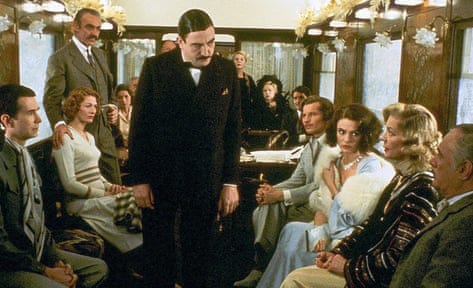
Or how about our own great Agatha Christie’s Murder on
the Orient Express. While it presents a classic whodunit
structure, its theme delves into justice and retribution. The
story challenges the black-and-white perception of right
and wrong, as the detective Hercule Poirot grapples with a
moral dilemma about legal justice versus moral justice. This
thematic complexity elevates the novel beyond a simple
mystery, inviting readers to question their own ethical beliefs.
I can’t compare my work to Dostoevsky or Agatha Christie,
sadly. The Spy Who Sank the Armada, the first book in the
Sir Anthony Standen Adventures, didn’t really have a theme.
I simply had to join the dots of Standen’s entry in the Oxford
Dictionary of National Biography. He was an Elizabethan spy
and the elder brother of my 10th great-grandfather. I imagined
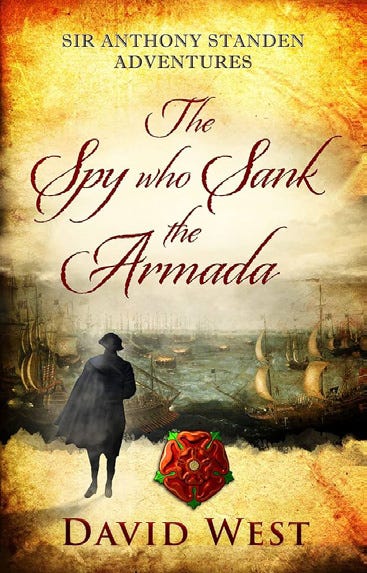
the why and how of the twists and turns in his life. It was quite
a life: he is the only man I know of to have been knighted by
both Mary Queen of Scots and Elizabeth I.
For each subsequent book, I scanned forward through history until
I found an event that inspired me.
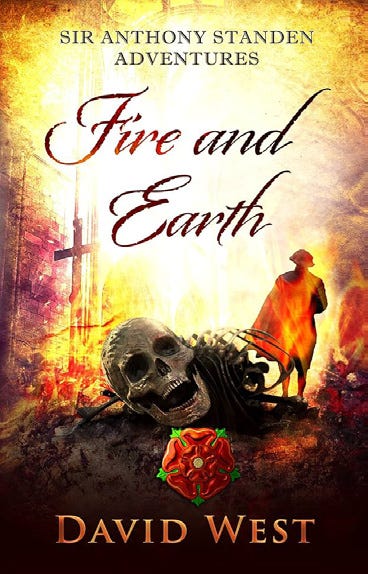
The second book, Fire and Earth, was inspired by the execution
of Giordano Bruno. When the wife of a dear friend,John, died,
he asked me if I believed in an immortal soul. I tried to give him
an honest answer, but to leave the door open to the possibility.
I told him that Gilbert Ryle described the concept as the ghost
in the machine, but that René Descartes believed inmind-body
dualism. Then I saw that the theme for Fire and Earth had
to be the conflict between faith and reason. Bruno had been executed,
amongst other reasons, for writing that the Earth revolved around the sun. Incidentally, it was in 1992 that the Catholic Church finally admitted that
it had been wrong, and that the scientists had been right.
The Suggested Assassin was inspired by the murder of King Henry IV
of France. Standen knew his wife, Marie de Medici, because he had
been sent by Sir Francis Walsingham to spy on her father, the Grand Duke
of Tuscany. Marie ruled as regent to her son, Louis XIII, after the assassination,
but Salic law prevented any woman from ruling in her own right.
At the time of writing, the “MeToo” movement was at its height,
so misogyny became the theme.
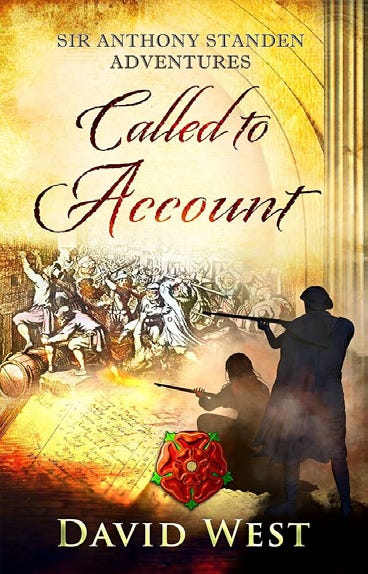
The inspiring event for Called to Account was the Fettmilch Uprising,
a pogrom in Frankfurt. Black Lives Matter was in the news, so anti-semitism
in particular, and racism in general, was the theme. Through my research,
I found that the mindset of the time was that God created a perfect world.
Therefore, if weather events caused crop failures and famine, someone
had to be to blame. Witches and Jews were the most common scapegoats.
The Favourite Murder, my work in progress, has favouritism as its theme.
Louis XIII was not his mother’s favourite son; Gaston was. I knew I had hit
on a powerful theme when I was on the Dartmouth Book Festival’s historical
fiction panel last year. Tim Pears and I were interviewed by John Suchet.
I was asked about my work in progress, and I described why I had chosen favouritism as the theme. It comes back to my friend John again, who has
had some mental health issues over the years. In the 90s, John’s brother
died of AIDS. John had nursed him through his illness, and on the day that
his brother died, their mother, in her grief, wailed that the wrong son
had died. The gasp of the audience told me all that I needed to know.
Having a historical crime fiction series means, for me anyway, that the
inspiring events come first and the theme second. But I’m not sure that’s
true of The Favourite Murder. Certainly, the location and period follow
on from the ending of Called to Account. However, the murder victim, the murderer, and the motive are all driven by the theme of favouritism.
WITHOUT THE THEME, I WOULDN’T HAVE A STORY.
https://www.davidvswest.co.uk
ORMA, THE SONG OF THE LARK
By our newest member Jac Forsyth
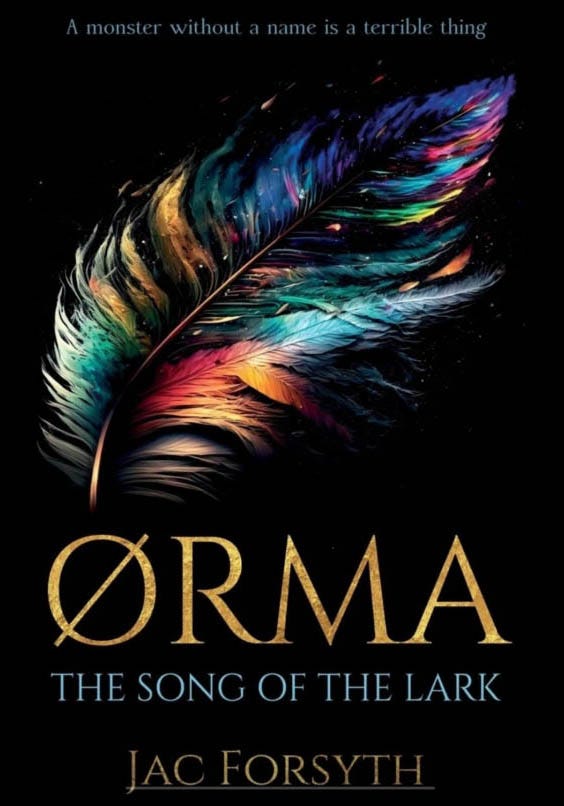
Two young people miss a bus and alter the outcome of a war
Full of satire, adventure and delicious surprises, Ørma is a liminal hero’s journey that takes us far into the drifting deserts of Afghanistan and the chocolate chip based desserts of a visitor teashop near Chichester.
When an extraordinary superspecies known only as the Mandolin emerges in Afghanistan, humans do what they do best: declare war and make a reality TV show. Eight months of televised war later, and a reality show is the only truth anyone cares about. But who are the Mandolin, and why do they protect the secrets of WØLF, a TV series created for war, and designed for public entertainment.
*************************************
Frustrated by civilian life, university student Hollow Quinn volunteers to join the British army. Her only friend Ezra Blake justifies the decision not to enlist, taking solace in a gothic anomaly full of magical innovation, mystical intrigue and self-aware furniture. But when Hollow grabs a starring role in the reality show, Ezra makes an impulsive decision. A decision that will overshadow even the horrors of a paraspecies war in Afghanistan. And as the game levels up, the non-player characters unlock the terrible secrets of WØLF. A reality show created for war, and designed for public entertainment.
https://jacforsyth.co.uk
Wow! Great stuff there. Well worth a read - the books & these articles. Melksham is full of literary talent.
Grant, might be wise to include the photo credit for the Murder on the Orient Express - Photograph: Allstar/Cinetext/EMI